

Table of Contents
- Is Premium Mechanic Gear Worth the Extra Cost?
- Budget vs Premium Mechanic Tools: Where the Money Actually Goes
- Durability and Performance Testing: What Separates Premium from Budget
- Best Mechanic Work Clothes: What Premium Workwear Gets Right
- Durable Workwear for Mechanics: Fit, Fabric, and Function
- Mechanic Tool Set for the Money: How to Prioritize Your Budget
- A Total Cost of Ownership Framework for Mechanics
- Frequently Asked Questions
Last Updated: October 5, 2026
Is Premium Mechanic Gear Worth the Extra Cost?
At BNF Motorworks, we talk to hobbyists, DIY mechanics, and full-time techs every week. The pattern is consistent: people who feel good about their premium purchases bought them for a specific reason, not because the price tag implied quality.
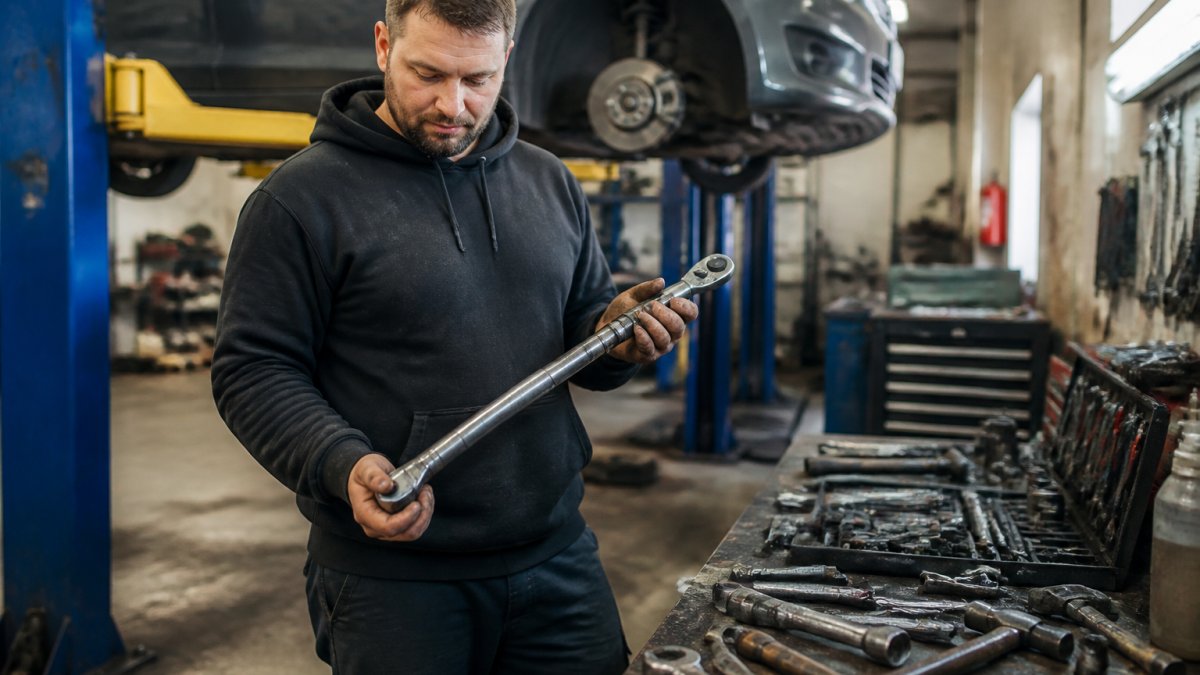
Budget vs Premium Mechanic Tools: Where the Money Actually Goes
The price difference between budget and premium mechanic tools shows up in three places: materials, manufacturing tolerance, and product support.
Purchase Price vs Long-Term Value
A budget tool wins on upfront cost; a premium tool wins on cost per year of use. A cheap ratchet replaced every couple of years costs more per year than a premium ratchet that lasts a decade. For occasional use, budget gear is often smarter; for daily professional use, premium gear usually pays for itself in reduced replacement frequency and fewer ruined fasteners.
Warranty, Repair Costs, and Replacement Frequency
Warranty is where premium brands separate themselves most clearly. Many premium tool lines offer lifetime warranties on hand tools, so a broken ratchet or cracked socket gets replaced rather than repurchased; budget lines typically offer limited warranties measured in months. Premium torque wrenches can often be recalibrated and serviced, while budget ones usually can't, so when they drift out of spec they become scrap.
OSHA hand and power tools guidance
Durability and Performance Testing: What Separates Premium from Budget
Durability and performance testing comes down to repeatability. A premium tool does the same job the same way on day one and day one thousand. A budget tool often works fine at first and then drifts.
Accuracy, Precision, and Consistent Performance
Accuracy is how close a measurement lands to the true value; precision is how consistently it lands in the same place. A torque wrench can be precise but inaccurate, which is worse than useless because it feels reliable while being wrong. Premium torque wrenches are typically tested and certified to a stated tolerance, and many come with a calibration certificate; budget wrenches often state a wider tolerance or none at all.
Expected Lifespan and Resale Value
Expected lifespan is the single biggest factor in whether premium pays off. A well-made combination wrench can last a working lifetime.
Resale value is the underrated part of the equation. Premium hand tools often hold a meaningful portion of their value on the used market, and vintage tools from respected makers can appreciate.
| Factor | Budget Tools | Premium Tools |
|---|---|---|
| Upfront cost | Low | High |
| Expected lifespan | Short | Long |
| Warranty | Limited | Often lifetime |
| Calibration/repair | Rarely available | Commonly supported |
| Resale value | Minimal | Meaningful |
| Best for | Occasional use | Daily professional use |
Best Mechanic Work Clothes: What Premium Workwear Gets Right
The query "is premium mechanic gear worth it" is ambiguous, and the top-ranking results prove it: some pages talk about hand tools, some about aftermarket parts, some about motorcycle gear, and some about workwear. The value math for premium workwear is not the same as for premium tools, so this section defines the category and assesses it on its own terms.
Three categories, three different value equations
Premium hand tools and diagnostic equipment are judged on accuracy, repeatability, warranty, calibration, and resale.
Premium workwear is judged on cost per wear, abrasion resistance, chemical resistance, fit retention after repeated laundering, and range of motion.
Mixing these three categories is how readers end up overspending on a logo and underspending on a torque wrench.
What actually makes mechanic workwear premium
Premium workwear is not defined by brand but by measurable construction details. Look for these signals:
- Fabric weight. Heavier fabric resists abrasion and holds shape longer. A lightweight promotional tee and a heavyweight work tee are not the same product, even if both are 100% cotton.
- Side-seamed construction. Tubular (unseamed) shirts twist and lose shape after repeated washing; side seams keep the garment square.
- Reinforced stress points. Bar-tacked pocket corners, double-needle shoulder seams, and reinforced collar ribbing are the details that fail first on cheap garments.
Cost per wear: the only honest workwear metric
Cost per wear is purchase price divided by the number of wears before the garment is retired. A cheap shirt worn fifty times before it fades costs more per wear than a premium shirt worn several hundred times, even at several times the upfront price. If a budget work shirt is replaced every season and a premium one lasts several years, the premium option usually wins within the first two replacement cycles.
Where premium workwear is not worth it
Premium workwear is not worth it when the garment is worn occasionally, used for dirty jobs that will destroy any fabric, or when the fit is wrong. A premium shirt that binds at the shoulders is worse than a cheap shirt that fits, because you will not wear it. Fit beats fabric every time.
NIOSH personal protective equipment resources
Premium PPE: the category where premium usually wins
PPE deserves separate treatment because the value equation is different. A premium cut-resistant glove, a properly rated respirator, or certified safety glasses is not a luxury upgrade, it is the minimum.
Durable Workwear for Mechanics: Fit, Fabric, and Function
Durable workwear for mechanics needs to handle abrasion, chemicals, and movement at once. Fabric weight is the clearest signal of durability: heavier cotton and cotton-blend fabrics resist tearing and hold their shape through repeated washing, so a heavyweight tee holds up far better than a thin promotional shirt when you're leaning over an engine bay. At BNF Motorworks, we offer automotive-themed apparel, including a variety of hoodie and t-shirt styles, perfect for enthusiasts who appreciate a rugged aesthetic and comfortable, high-quality gear.
BNF Motorworks — Mahk and Crew Heavyweight Tee →

Mechanic Tool Set for the Money: How to Prioritize Your Budget
The best mechanic tool set for the money is built around what you actually do, not what looks impressive in a catalog. Prioritize by frequency of use and consequence of failure:
- Torque wrench, accuracy matters for safety-critical fasteners, so this is worth buying premium.
- Ratchets and sockets, daily-use items where durability pays off fastest.
- Combination wrenches, buy premium if you use them daily, budget if occasionally.
- Screwdrivers and pliers, mid-tier is often the sweet spot.
- Specialty tools, buy as needed; premium only if the job is recurring.
- Workwear, buy durable fabric and good fit over brand names.
A Total Cost of Ownership Framework for Mechanics
Most articles on premium mechanic gear compare sticker prices and stop there. The right comparison is total cost of ownership (TCO) over a defined period, broken down by line item.
The TCO formula
For any single item, TCO over a defined period is:
TCO = Purchase price + (Repairs × repair cost) + (Replacements × replacement cost) + Downtime cost − Resale value
Divide that by the number of years in the period to get cost per year, which compares budget and premium fairly because it normalizes for lifespan.
The five inputs that matter for mechanic gear
- Purchase price. The only input most buyers look at, and the least informative on its own.
- Repair and replacement frequency. A budget ratchet that fails every two years under daily use has a very different TCO than a premium ratchet that lasts a decade.
- Downtime cost. For a professional tech or shop, a failed tool means lost billable time. A tool that fails mid-job on a customer vehicle can cost far more in downtime than the tool itself, an input hobbyists can ignore and professionals cannot.
- Warranty coverage. A lifetime warranty on a hand tool effectively caps replacement cost at zero for covered failure modes; a limited warranty measured in months does not. Read the fine print: transferability, exclusions, and local service availability all change the real value.
- Resale value. Premium hand tools from established makers often hold a meaningful portion of their value on the used market, and some vintage tools appreciate, while budget tools typically have little or no resale value. Residual value lowers the true cost of the premium purchase.
A worked example: ratchet over ten years
Numbers below are illustrative, substitute your own local figures.
Budget ratchet, ten-year period: purchase price low; roughly five replacements under daily professional use; repair rarely supported; limited warranty measured in months; minimal resale value; each mid-job failure can cost billable hours.
Run the math and the premium ratchet frequently wins on cost per year within the first replacement cycle, even at several times the upfront price.
The same math for workwear and PPE
Workwear has no resale value and no warranty, so the TCO reduces to cost per wear: a premium garment worn several hundred times beats a budget garment replaced every season, even at several times the price. PPE is the exception, replace on schedule regardless of price, because the cost of a failed glove or respirator is not measured in dollars.
Guidance by experience level and workload
Your experience level and workload should drive the decision more than brand loyalty.
- Apprentice or beginner: Budget or mid-tier for most hand tools; upgrade only daily-use items and safety-critical accuracy tools. Do not finance a premium set before you know what you actually use.
- Occasional DIY / home mechanic: Budget to mid-tier for most tools, with premium on the torque wrench and PPE, where accuracy and safety have outsized consequences.
- Serious hobbyist: Mid-tier across the board, with premium on high-use items and precision instruments. Durable workwear pays off because you wear it often enough for cost per wear to matter.
Which items deserve a premium budget first
If your budget is limited, spend it in this order:
- Safety-critical precision items, torque wrenches, calibration tools, and anything affecting fastener integrity on brakes, suspension, or engine internals.
- Daily-use hand tools, ratchets, sockets, and combination wrenches. Durability pays off fastest here.
- PPE, gloves, eye protection, hearing protection, and respirators. Buy to the rating, not the price tag.
- Durable workwear, heavyweight fabric, side-seamed construction, and reinforced stress points. Cost per wear drives the decision.
- Mid-tier screwdrivers, pliers, and specialty tools, the sweet spot for most buyers.
- Low-use specialty tools, buy as needed, and only go premium if the job is recurring.
The most common mistake is spending premium money on tools used twice a year while skimping on the ones used every day. Flip that instinct and the TCO math usually falls in your favor.
Compatibility, maintenance, and repairability
TCO is not just about price and lifespan; it is also about whether the item fits your existing system and can be kept in service.
- Tool system compatibility. Sockets, ratchets, and accessories from one system are not always interchangeable with another. Standardizing reduces duplicate purchases and speeds replacements.
- Maintenance and calibration. Torque wrenches and precision instruments need periodic calibration. Premium lines usually support this; budget lines often do not, so a drifted budget wrench becomes scrap rather than a serviceable tool.
- Replacement parts availability. A tool with a long production run and a deep parts catalog stays serviceable for years; a discontinued budget line does not.
| Use Case | Recommended Spend | Why |
|---|---|---|
| Occasional DIY | Budget to mid-tier | Low frequency, low replacement cost, low downtime cost |
| Serious hobbyist | Mid-tier plus premium torque wrench and PPE | Frequent use, safety matters, cost per wear becomes relevant |
| Professional tech | Premium on high-use, safety-critical, precision items | Downtime and accuracy cost more than the tools |
| Multi-tech shop | Premium across the board on shared tools | Replacement frequency and downtime drive total cost |
Consumer Product Safety Commission guidance on product safety
Frequently Asked Questions
Is premium mechanic gear worth the extra cost?
It depends on how often you use it. For daily professional use, premium mechanic gear often pays for itself through longer lifespan, fewer replacements, and better warranty coverage. For occasional DIY work, budget tools and apparel can deliver acceptable results at a lower upfront cost. The deciding factors are usage frequency, the cost of downtime, and whether the item needs precision, like a torque wrench, or just durability.
What is the best mechanic tool set for the money?
The best mechanic tool set for the money balances upfront cost with replacement frequency. Look for tools with clear warranty terms, comfortable grip, and consistent performance. A set that costs more but lasts years without replacement often beats a cheaper set you replace every few months. Prioritize the tools you use daily, like wrenches and sockets, and go budget on items you rarely touch.
What are the best work clothes for mechanics?
The best mechanic work clothes prioritize durability, comfort, and range of motion. Look for heavyweight fabrics, reinforced stitching, and fits that do not restrict movement when you are reaching, kneeling, or handling tools. For garage hobbyists and enthusiasts, automotive-themed apparel like BNF Motorworks' heavyweight tees offers a combination of rugged style and everyday comfort, whether you are under the hood or at a car show.
Which mechanic tools are worth buying premium?
Tools that affect accuracy and safety deserve a premium budget. Torque wrenches, precision measuring tools, and anything that protects you from injury are worth the extra upfront cost. Tools you use daily and rely on for consistent performance also justify premium pricing because downtime and labor savings add up fast. For tools you use once or twice a year, a budget option is usually fine.
How do you choose durable workwear for a mechanic?
Choose durable workwear for a mechanic by checking fabric weight, stitching quality, and fit. Heavier fabrics resist wear and hold their shape through repeated washes. Side-seamed construction and reinforced collars add lifespan. Fit matters too: workwear that restricts your range of motion slows you down and creates pressure points. Look for apparel designed for the garage environment, not just generic shirts with a logo printed on them.